Quick Facts
- Category: Environment & Energy
- Published: 2026-05-14 23:52:39
- 5 Game-Changing AWS Updates from April 2026: AI Costs, Cybersecurity, Agent Orchestration, and Storage
- Block Protocol Breakthrough: Making the Semantic Web a Reality at Last
- Network Tools tcpdump and dig Get Crucial Man Page Updates with Beginner-Friendly Examples
- Helldivers 2's Evolving Galactic War: Multi-Week Campaigns and Branching Narratives Arrive This Summer
- AI Literacy Declared 'Essential Survival Skill' in Digital Age, Microsoft Tech Fellow Warns
The Evolving Landscape of Electric Vehicle Concerns
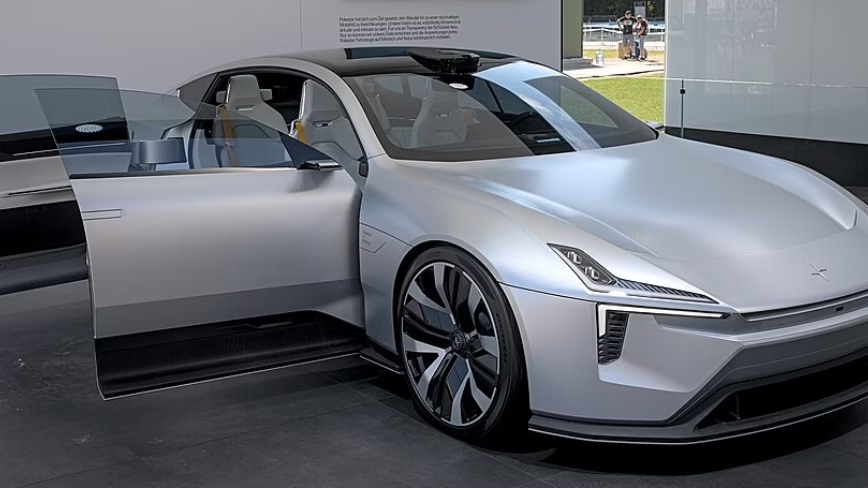
For the better part of a decade, the primary barrier to widespread electric vehicle (EV) adoption was a single, well-known fear: range anxiety. Drivers worried about running out of battery power before reaching a charging station, a concern that manufacturers tackled through longer-range batteries and expanding charging networks. But according to Polestar's chief executive, the narrative has shifted dramatically. The new source of consumer hesitation, he argues, is not about distance but about dollars and cents.
From Battery Miles to Fuel Costs
Speaking on CNBC's Squawk Box Europe, Polestar CEO Michael Lohscheller introduced a concept he calls "pump anxiety". He explained that potential EV buyers are increasingly asking, "How much do I pay at the gas station?"—or, in this case, the virtual pump of a public charger. As electricity prices have risen in many markets, the cost of charging an EV can vary wildly depending on location, time of day, and provider. This unpredictability, Lohscheller suggests, now worries consumers more than the fear of being stranded without power.
The logic is straightforward: while range has improved significantly—most new EVs offer over 250 miles on a single charge—the cost per mile is no longer a guaranteed bargain. In some regions, fast-charging rates have climbed to levels that rival or even exceed gasoline costs. This squeezes one of the biggest selling points of EVs: lower fuel expenses. The anxiety, therefore, has moved from "Will I get there?" to "Will it cost me a fortune to get there?"
The Financial Reality Behind Polestar's Optimistic Message
While the CEO's reframing of consumer anxiety makes for a catchy headline, a look at Polestar's balance sheet reveals a more complex and less cheerful story. The company, which was spun off from Volvo and Geely, has been burning through cash as it struggles to achieve profitability. Its most recent financial reports show widening losses, declining revenue growth, and mounting inventory. This has led to a cash crunch that forced Polestar to seek additional funding from its parent companies and cut its ambitious vehicle delivery targets.
Sales Figures and Production Woes
Polestar's global sales in 2023 fell short of expectations, with the company delivering just over 54,000 vehicles—a far cry from earlier forecasts that predicted 80,000 or more. The production ramp-up of the Polestar 3 SUV, a critical model for the brand's premium positioning, has been delayed multiple times due to software issues and supply chain constraints. Meanwhile, the Polestar 2 sedan, once a strong seller in Europe, faces stiff competition from Tesla's Model 3 and newer entrants like the BYD Seal. The result is a brand that is trying to position itself as a high-performance, design-led alternative, but is struggling to convert that image into consistent sales volume.
Cost Pressures and Margin Squeeze
The "pump anxiety" narrative also sidesteps Polestar's own cost structure. The company's vehicles are not cheap—the Polestar 2 starts around $50,000 in the US, and the upcoming Polestar 4 and 5 will push higher. With rising input costs for batteries and raw materials, and the need to invest heavily in marketing and new models, the company faces a margin squeeze. Lohscheller's focus on consumer charging costs may be an attempt to shift attention away from Polestar's own pricing challenges and appeal to budget-conscious buyers. But investors are more focused on the red ink flowing from the company's income statement.

What the Shift in Anxiety Means for the EV Industry
Despite Polestar's internal struggles, Lohscheller's observation about pump anxiety does reflect a genuine shift in the EV market. Surveys show that as range improves, concerns about charging infrastructure and cost are now the top barriers to purchase in many regions. A 2024 J.D. Power study found that 39% of potential EV buyers cited "cost of electricity" as a major concern, up from 27% two years earlier. This underscores the need for transparent pricing at public charging stations and for utilities to offer time-of-use rates that reward off-peak charging.
Charging Networks Under Pressure
The rise of pump anxiety also puts pressure on charging networks to standardize pricing and improve reliability. Polestar, along with other automakers, has been investing in its own charging partnerships—such as the IONNA joint venture with BMW, Honda, Mercedes-Benz, and others—but so far, the customer experience remains fragmented. If Polestar can help lead the way in making charging costs predictable and fair, it could turn Lohscheller's new phrase into a tangible competitive advantage. For now, however, the company's balance sheet tells a different story: one of high burn rate, low volume, and uncertain path to break-even.
- Key Insight: Consumer anxiety has shifted from how far an EV can go to how much it costs to fuel it.
- Warning Sign: Polestar's financial reports reveal declining sales and mounting losses, complicating the CEO's optimistic messaging.
- Industry Implication: Automakers and charging networks must work together to make charging costs transparent and predictable.
In the end, Lohscheller's "pump anxiety" may be a useful marketing term, but it will take more than a new buzzword to reassure drivers—and investors—that Polestar is on a path to sustainable success. For now, the EV maker's fate hinges less on the psychology of fueling and more on the hard numbers of its bottom line.