Quick Facts
- Category: Mobile Development
- Published: 2026-05-01 18:25:45
- Unearthing a Golden Relic: The 1,500-Year-Old Scabbard Ornament Found in Norway
- Maximize Your Workspace: Huanuo FlowLift Dual Monitor Arm FAQs
- Making C Libraries Feel at Home in Swift: A Guide to Better Interoperability
- AWS Unveils Claude Opus 4.7 in Bedrock and AWS Interconnect General Availability
- From Coding Newbie to AI Agent Builder: My Journey Creating a Leaderboard-Cracking System
When Kenya's Sabastian Sawe crossed the finish line at the London Marathon on April 26, 2026, with a time of 1:59.30, history was made—not just for him, but for Adidas. His shoe, the Adizero Adios Pro Evo 3, weighing just 97 grams, became the fastest ever worn in an official race. Here are 10 things you need to know about this revolutionary supershoe.
1. The Record-Breaking Moment
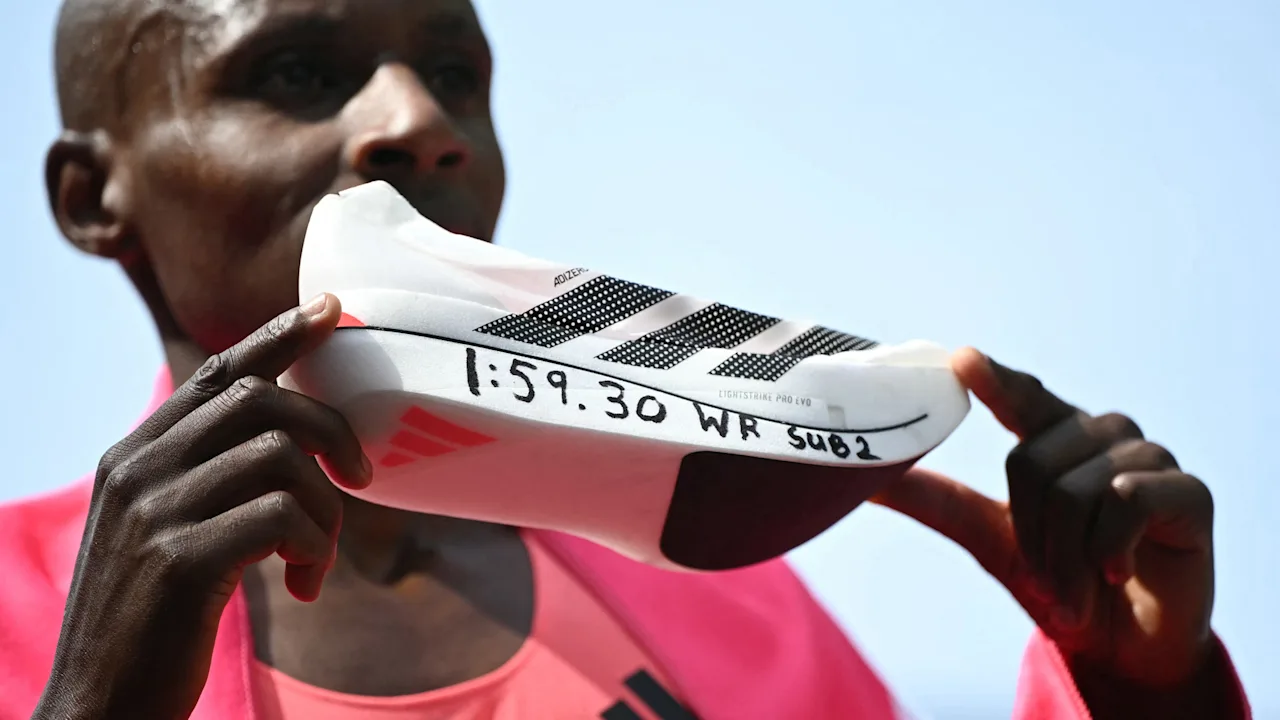
As Sawe shattered the two-hour barrier, an Adidas attendant immediately collected his shoes, jotting down his historic time—1:59.30—on the side. After a quick photo session, the footwear was rushed to Adidas's archives in Herzogenaurach, Germany. That single moment transformed the Evo 3 from a prototype into the fastest marathon shoe in existence, cementing its place in athletic history.
2. Three Records in One Race
The Evo 3 didn't just power Sawe; it also helped Ethiopia's Yomif Kejelcha finish at 1:59.41 and Tigist Assefa set a women's world record of 2:15.41. All three runners, official Adidas partners, wore the same model. This collective triumph underscores the shoe's ability to deliver peak performance across genders and pacing strategies.
3. Unprecedented Lightness
At just 97 grams, the Evo 3 weighs less than a standard bar of soap. It's the lightest race shoe Adidas has ever produced, achieved by stripping away every unnecessary gram. This extreme weight reduction allows runners to maintain faster cadence with less energy expenditure, a key factor in breaking world records.
4. Lightning-Fast Sellout
Adidas unveiled the Evo 3 on April 23, just days before the race. A limited launch of 200 pairs sold out in under two minutes. Scalpers quickly resold them online for up to $4,000. This frenzy shows the demand for cutting-edge performance gear, and Adidas plans more limited drops before a wider release around the Berlin Marathon in September.
5. A Battleground Like F1
Marc Makowski, Adidas's SVP of innovation, compares marathon racing to Formula 1 in the automotive industry. It's the ultimate arena for brands to prove their performance credibility. With the Evo 3, Adidas has taken the lead over competitors like Nike (Alphafly 3), On (LightSpray), and Asics (Metaspeed Edge) in the high-stakes supershoe race.
6. Three Years of Development
The Evo 3 emerged from over three years of intensive R&D under the Adizero Adios Pro program. Adidas worked closely with elite athletes to identify what truly makes a shoe fast. The result is a design that balances extreme lightness with responsive cushioning, a breakthrough that required iterative testing of materials and structures.
7. The 'Less Is More' Philosophy
Drawing inspiration from F1 engineering, the team embraced minimalism. Every component was scrutinized: the foam density, the outsole thickness, even the laces. By eliminating all non-essentials, they created a shoe that feels barely there on the foot. This philosophy challenges the industry's tendency to add features, proving that subtraction can be the ultimate innovation.
8. Impact of Tiny Details
Small design choices had outsized effects. For instance, the shoe's upper uses a ultra-thin mesh that reduces wind resistance while maintaining structural integrity. The midsole foam is strategically placed to maximize energy return without adding weight. These micro-optimizations, like adjusting the heel drop by a millimeter, contributed to the record-breaking performance.
9. Commercial vs. Elite Versions
The current Evo 3 is an elite prototype, not intended for mass retail. Adidas will release a commercial iteration after the Berlin Marathon, likely modified for durability and broader fit. This strategy mirrors Nike's earlier approach with the Vaporfly, but the Evo 3's 97-gram starting point sets a new baseline for what a supershoe can weigh.
10. What's Next for Adidas?
With the Evo 3, Adidas has raised the bar—and the pressure. The brand must now sustain its lead by refining materials and exploring new manufacturing techniques. Future versions may incorporate biodegradable components or advanced carbon-fiber geometries. For now, the Evo 3 stands as a testament to what happens when innovation is pushed to its limits.
In summary, the Adizero Adios Pro Evo 3 isn't just a shoe; it's a paradigm shift. By prioritizing lightness over everything else, Adidas has rewritten the rules of marathon performance. As more athletes get their hands (and feet) on this technology, the world of competitive running will never be the same.